
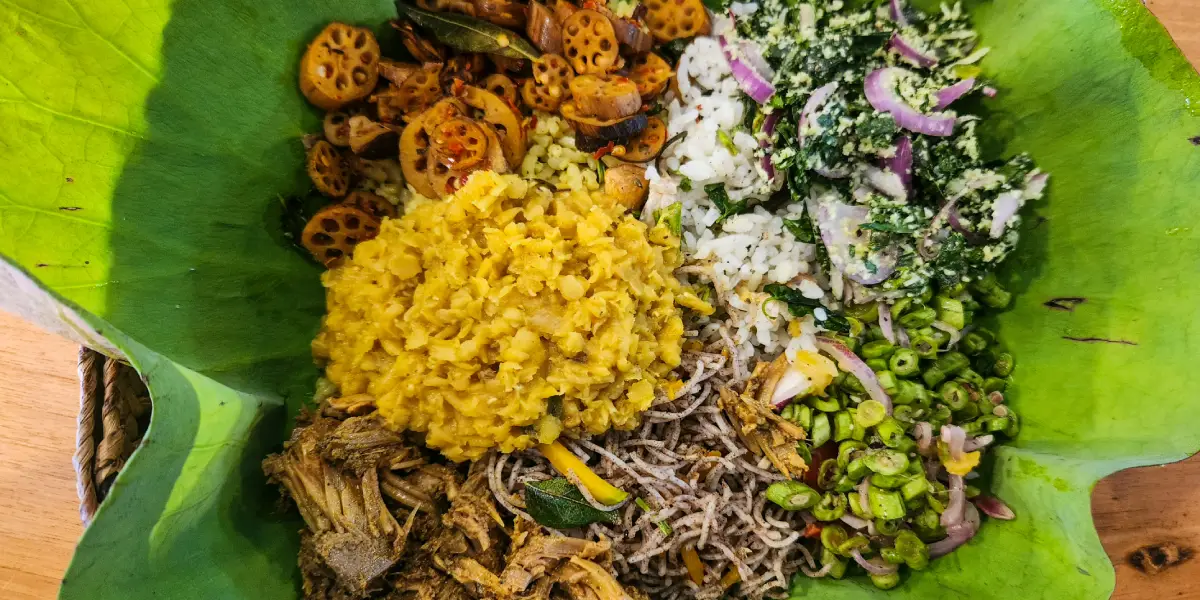

Sri Lanka has one of the most distinctive and flavourful cuisines in Asia, built on a foundation of rice, coconut, and an extensive range of spices cultivated on the island including cinnamon, cardamom, clove, black pepper, and curry leaf. Sri Lankan food differs significantly from Indian cuisine despite sharing some common ingredients, with a greater emphasis on coconut milk, dried fish, and the unique spice blends developed over centuries of trade with Arab, Portuguese, Dutch, and British merchants. This guide covers the essential dishes every visitor should try, where to find the best food across the island, and practical advice for travellers with dietary requirements. For practical advice on food safety during your visit, read our Sri Lanka travel tips guide.
Rice and Curry: The Foundation of Sri Lankan Cuisine
Rice and curry is the foundational meal of Sri Lankan daily life, eaten for breakfast, lunch, and dinner across all regions of the island. A standard rice and curry meal consists of a central mound of steamed white rice or red rice surrounded by a selection of curry dishes served in small portions. A typical meal includes a protein curry (fish, chicken, beef, mutton, or prawn), a dhal curry made from red lentils cooked with coconut milk and tempered with mustard seeds and curry leaves, a vegetable curry using seasonal produce such as jackfruit, breadfruit, green beans, or bitter gourd, and a fresh coconut sambol made from freshly grated coconut mixed with red onion, dried chilli, lime juice, and Maldive fish. The meal is finished with a papadum and often accompanied by a small salad of sliced tomato, onion, and green chilli dressed with lime juice. Rice and curry is available at local restaurants called “hotels” throughout Sri Lanka for approximately 300 to 600 LKR per person, making it one of the most affordable and nutritious meals available to visitors.
Hoppers
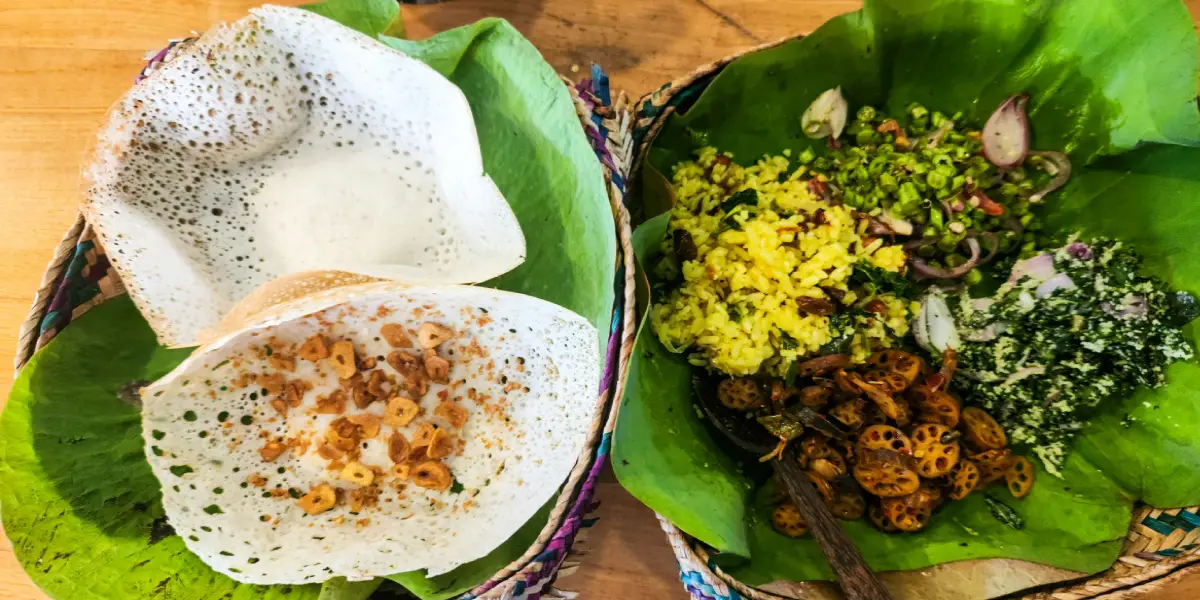
Hoppers (appa in Sinhala) are bowl-shaped pancakes made from a fermented batter of rice flour, coconut milk, and a small amount of toddy (fermented palm sap) or yeast, cooked in a small curved iron pan. The fermentation process gives hoppers a slightly sour flavour and a crispy outer edge with a soft, spongy centre. Plain hoppers are eaten with coconut sambol and curry for breakfast or dinner. Egg hoppers are made by cracking a raw egg into the centre of the batter before the hopper sets, producing a fried egg embedded in the base of the bowl. String hoppers (idiyappam) are a related dish made by pressing rice flour dough through a mould to create thin noodle strands, which are then steamed into flat circular nests and served with coconut milk curry and sambol. Hoppers are primarily a breakfast and dinner food and are less commonly served at lunchtime. They are available at most local restaurants across the island for approximately 30 to 80 LKR each.
Kottu Roti
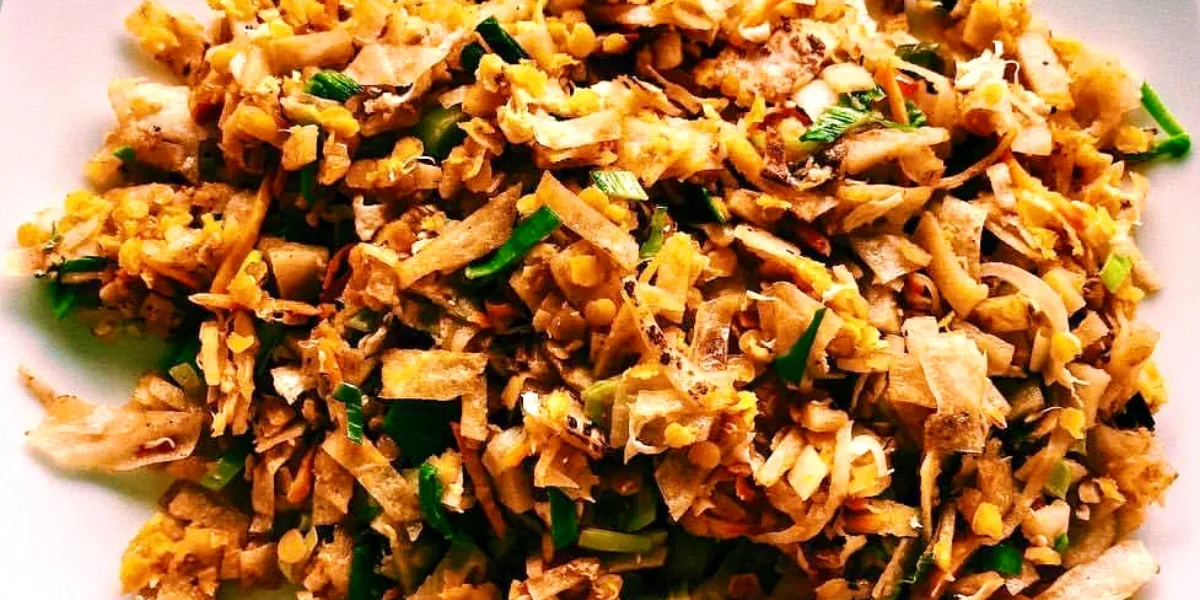
Kottu roti is one of Sri Lanka’s most popular street foods, made by chopping up godamba roti (a thin flatbread) on a flat iron griddle with vegetables, egg, and a choice of chicken, beef, mutton, or cheese, using two metal blades in a rhythmic chopping motion that produces the distinctive clanging sound heard outside kottu stalls across the island. The chopped roti is mixed with a sauce made from curry gravy, creating a flavourful, slightly chewy dish that is filling and inexpensive. A standard chicken kottu costs approximately 400 to 700 LKR at a local restaurant. Kottu roti is available at restaurants throughout Sri Lanka but is at its best at busy local establishments with high turnover, where the griddle is constantly in use and the ingredients are always fresh. In Ella, several restaurants on the main street serve kottu roti until late evening and it is a popular choice among travellers after a day of hiking.
Seafood on the Southern Coast
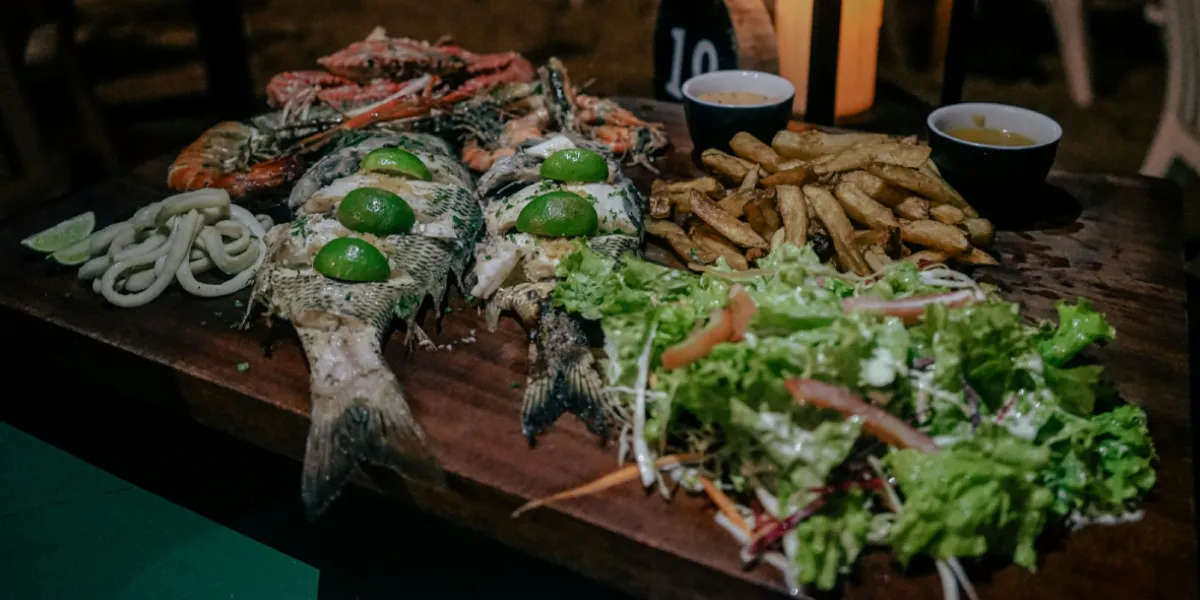
Sri Lanka’s extensive coastline produces an abundant supply of fresh seafood including tuna, seer fish (wahoo), red snapper, barramundi, tiger prawns, cuttlefish, lobster, and crab. The southern coast from Galle to Mirissa and Tangalle has the highest concentration of seafood restaurants serving freshly caught fish grilled, fried, or prepared in a Sri Lankan curry. The most commonly available fish curry is a sour fish curry called ambulthiyal, made with goraka (a dried acidic fruit native to Sri Lanka) that acts as a natural preservative and gives the curry a distinctive dark colour and sour flavour unlike any other curry on the island. Crab curry made with blue swimmer crab in a spiced coconut milk gravy is a regional speciality of the southern coast and is available at most beachside restaurants in Mirissa and Unawatuna. Prawn dishes are widely available along the entire coast, with devilled prawns prepared in a dry stir-fry with onion, tomato, capsicum, and chilli being one of the most popular preparations.
Sri Lankan Breakfast Foods
Sri Lankan breakfast culture is distinct from Western breakfast traditions and varies by region and religion. The most common breakfast items include hoppers and string hoppers served with coconut sambol and curry, pol roti (thick coconut flatbread cooked on a griddle and eaten with sambol or curry), kiribath (milk rice cooked in coconut milk until thick and cut into diamond shapes, eaten on auspicious occasions and celebrations), and pittu (cylindrical cakes of steamed rice flour and coconut eaten with coconut milk and curry). In the hill country around Kandy and Nuwara Eliya, bread and butter with tea is also a common breakfast option reflecting the British colonial influence in the region. Tourist guesthouses and hotels typically offer a mixed Sri Lankan and Western breakfast, with eggs, toast, fruit, and both hoppers and string hoppers available.
Short Eats: Sri Lankan Snack Culture
Short eats are a category of Sri Lankan snack foods sold at tea houses, bakeries, and local shops throughout the island, eaten between meals with a cup of tea. Common short eats include wade (deep-fried lentil doughnuts with a crispy exterior and soft interior), isso wade (wade topped with a whole prawn), cutlets (breaded and deep-fried potato and fish croquettes seasoned with onion, chilli, and curry leaf), rotis filled with spiced potato or dhal, and Chinese rolls (a Sri Lankan adaptation of spring rolls filled with minced chicken or vegetable and wrapped in a thin egg pancake before deep frying). Short eats are priced individually at approximately 50 to 150 LKR each and are the ideal midday snack during sightseeing. The short eats culture is most visible in Colombo’s local bakeries and in the tea houses found at bus stops and markets throughout the Cultural Triangle near Dambulla and Sigiriya.
Ceylon Tea
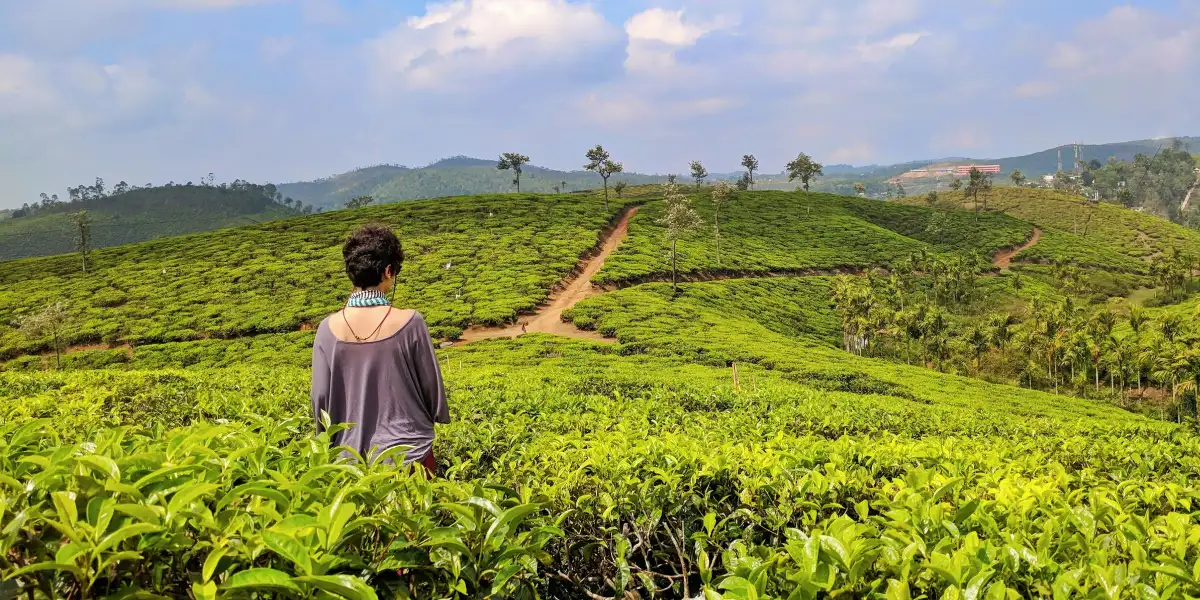
Ceylon tea is one of Sri Lanka’s most important exports and one of the defining sensory experiences of any visit to the hill country. Sri Lanka is the world’s fourth largest producer of tea and the largest producer of true cinnamon, with the Ceylon tea industry established by British planter James Taylor on the Loolecondera estate in Kandy District in 1867. Ceylon teas are classified by elevation into three grades: low-grown teas from below 600 metres producing a full-bodied, strong liquor; mid-grown teas from 600 to 1,200 metres producing a medium-bodied, fragrant tea; and high-grown teas from above 1,200 metres producing a light, delicate liquor with a subtle muscatel character. The Uva region around Ella produces the most internationally recognised high-grown Ceylon tea, with the distinctive Uva flavour caused by the seasonal northeast wind that creates dry stress conditions concentrating flavour compounds in the leaf between July and September. Tea factory tours are available at estates throughout the hill country, typically including a demonstration of the production process and a tasting of freshly brewed tea. A cup of freshly brewed Ceylon tea at a local tea house costs approximately 50 to 100 LKR.
King Coconut and Fresh Juice
King coconut (thambili in Sinhala) is a variety of coconut unique to Sri Lanka, distinguishable from the common green coconut by its bright orange colour. King coconut water is sweeter, lower in fat, and higher in electrolytes than common coconut water, making it one of the most effective natural rehydration drinks available in the tropical heat. King coconuts are sold by roadside vendors throughout Sri Lanka for approximately 60 to 100 LKR each, with the top cut open on the spot for drinking directly from the shell. After drinking the water, the vendor will cut the coconut in half and scrape out the thin layer of soft jelly inside. Fresh fruit juices made from mango, papaya, pineapple, passion fruit, woodapple, and beli (aegle marmelos) are available at most tourist restaurants and are inexpensive and nutritious. Woodapple juice and beli juice are uniquely Sri Lankan drinks with a distinctive tangy, slightly astringent flavour and are particularly recommended for visitors experiencing digestive issues.
Vegetarian and Vegan Food in Sri Lanka
Sri Lanka is an excellent destination for vegetarian and vegan travellers, as the majority of the traditional Sri Lankan diet is plant-based. Rice and curry meals can be ordered without meat or fish at most local restaurants, with the dhal curry, coconut sambol, and vegetable curries forming a complete and nutritious meal. Buddhist restaurants, particularly those near temple complexes, serve entirely vegetarian food. Hindu-majority areas in the north and east of the island have a strong tradition of pure vegetarian cooking without onion or garlic, reflecting South Indian Brahmin culinary traditions. The main challenge for strict vegans is that many apparently vegetarian dishes contain Maldive fish (dried tuna flakes) as a flavour base, including the standard coconut sambol and many vegetable curries. When ordering at local restaurants, specifying “no Maldive fish” (in addition to “no meat, no fish”) is necessary for a strictly vegan meal. Tourist restaurants in Ella, Galle, and Kandy have adapted to the growing number of vegetarian and vegan visitors and typically offer clearly labelled plant-based options.
The Ramayana Trail and Indian Vegetarian Food
For Indian visitors following the Ramayana Trail, vegetarian food is widely available along the trail route including Chilaw, Trincomalee, Kandy, Nuwara Eliya, Kataragama, and Colombo. Tamil Hindu communities in Trincomalee and the northern regions maintain a strong tradition of South Indian vegetarian cooking including dosai, idli, sambar, rasam, and coconut chutney that will be familiar to visitors from Tamil Nadu and other South Indian states. Many restaurants along the Ramayana Trail route can accommodate requests for meals without onion and garlic for Jain visitors. Our Ramayana Trail tour includes vegetarian meal options throughout on request.
Where to Eat in Sri Lanka
Sri Lanka has three main categories of eating establishments. Local hotels (confusingly named despite being restaurants rather than accommodation) are the most affordable option, serving rice and curry and short eats at prices of 300 to 800 LKR per meal. These establishments cater primarily to local workers and residents and offer the most authentic Sri Lankan food experience. Tourist restaurants in areas like Ella, Galle Fort, Unawatuna, and Mirissa offer adapted Sri Lankan dishes alongside Western food options at prices of 800 to 2,500 LKR per meal, with English menus and staff accustomed to international dietary requirements. Fine dining restaurants in Colombo, Kandy, and Galle Fort serve both Sri Lankan and international cuisine at prices comparable to mid-range European restaurants. The most memorable food experiences in Sri Lanka are often found at the simplest establishments: a rice and curry meal eaten at a roadside hotel, a cup of tea at a plantation tea house, or a kottu roti prepared at a busy street stall late in the evening.
Plan Your Sri Lanka Food Experience
The best way to experience Sri Lanka’s food culture is through a private guided tour where your guide can introduce you to local restaurants, translate menus, and recommend the best dishes for your preferences and dietary requirements. Browse our Sri Lanka tour packages to find an itinerary that combines the island’s culinary highlights with its most iconic destinations.
0 Comment